Lebanese President Joseph Aoun arrives at the White House on Tuesday with a single delicate mission: convince President Donald Trump to press Israel into honoring a U.S.-brokered agreement that would pull Israeli troops out of Lebanon and disarm Hezbollah.
It is an ask that could publicly pull Trump’s aims apart from Israel’s — convincing Israel to pull back where Prime Minister Benjamin Netanyahu has favored pressing forward.
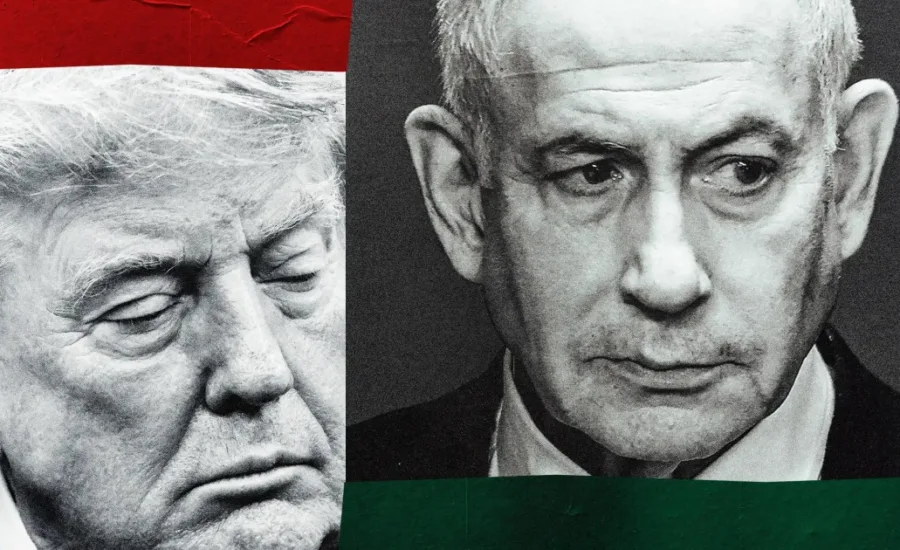
Netanyahu will not be in the room. But his presence hangs over it. Trump has stood closely with him — on Iran, on Gaza, on the regional map. And as Netanyahu’s forces occupy southern Lebanon, with little sign of urgency to withdraw, Aoun is effectively asking Trump to push his closest partner in the region to move in a direction Israel so far has not.
The meeting marks the first visit to the White House by a Lebanese president in nearly two decades, and it comes at a fraught moment for the conflict-worn nation, with hundreds of thousands of Lebanese displaced in the aftermath of Israeli strikes.
Aoun’s immediate goal is concrete: secure U.S. military and financial aid to help Lebanon carry out a trilateral framework meant to cement peace with Israel. The agreement, signed in June, calls for a phased Israeli withdrawal in exchange for Lebanese steps to disarm Hezbollah.
“President Aoun is going to show a real willingness, a real desire to put the Lebanese Armed Forces to the test, for people to have faith,” said Hagar Chemali, co-founder of the Lebanon-Israel Peace Alliance and former National Security Council director for the Middle East. “His goal is to garner more support in terms of equipment and financial support.”
For Chemali, the visit turns on a mutual bet.
“The U.S. needs President Aoun to have the strength he needs and time and space to execute that framework agreement,” Chemali said. “And on Aoun’s side, he trusts President Trump to fulfill not just the U.S. commitments in the framework agreement — which have to do more with military support, garnering investment, stuff like that — but also to hold Israel’s feet to the fire.”
There are early signs of movement. On Monday, the State Department said the first of several “pilot zones” — designated areas in southern Lebanon where Israel will ease its military control and let Lebanese forces take sole authority — had been created.
“The establishment of these initial pilot zones represents real progress on the ground,” said a U.S. official, granted anonymity to discuss sensitive planning, in an email. “It is an opportunity for the Lebanese state to begin to reassert real control in areas historically dominated by Hizballah” and would ideally create momentum needed for the Lebanese Armed Forces, or LAF, to expand the process and move toward peace, the official added — warning against any attempt by Hezbollah to derail the effort.
Israel signaled it is in no hurry to leave. An Israeli military official said Israel will remain “for as long as necessary to defend the communities of northern Israel” and “retain the freedom of operation to remove threats posed to the soldiers” deployed to the security zone.
Aoun has spent the last several days laying the groundwork. In a stage-setting meeting, Secretary of State Marco Rubio praised Lebanon’s “move towards peace” and “determined efforts to reclaim Lebanon’s sovereignty, disarm Hezbollah and dismantle its terrorist infrastructure and move towards peace,” according to a State Department statement.
Now Aoun will have to prove to Trump that he can deliver. “The hurdle in general will be: Can he give enough detail on Hezbollah’s disarmament, and how that will go?” Chemali said. “How it will work, whether there are deadlines and timetables, etc. — enough for him to get the support that he wants for the LAF.”
The stakes, she said, are not only diplomatic but historic. For the first time in two decades, a Lebanese president represents a government in which Hezbollah is not merely a diminished player but one whose military and security operations the state has declared illegal — and a government willing to speak loudly against Iran at a moment when Washington is listening.
If that is the test Aoun faces, Trump faces one of his own. The larger question is whether he has the means, or the will, to lean on Netanyahu. The two remain close: Trump has hosted him six times since returning to office, though not since February, before the two men launched a joint military offensive against Iran. Netanyahu’s plans to return to Washington remain unsettled — a conspicuous pause for a leader this central to Trump’s Middle East policy. Pressing him now would test Trump’s ability to hold a line Netanyahu opposes — something he has struggled to do before.
Iran is the clearest case. In June 2025, Trump said he was not ready to abandon nuclear negotiations with Tehran and publicly warned Israel against striking. “I don’t want them going in, because I think it would blow — it might help it, actually, but it also could blow it,” he said — just eight hours before Israel launched its airstrikes anyway. Ten days later, Trump ordered the U.S. military to join, bombing three major Iranian nuclear facilities.
Netanyahu went on to nominate Trump for the Nobel Peace Prize. He made Trump aware of the move during a White House visit at which Trump deferred to the Israeli leader when asked by a reporter whether he believed in a two-state solution.
“I don’t know — I’ll ask Bibi that question. You have the greatest man in the world to answer that age-old question: Two state? Go ahead — give him your honest answer,” Trump said, motioning to the Israeli prime minister.
“I think Palestinians should have all the powers to govern themselves, but none of the powers should threaten us. That means that certain powers, like overall security, will always remain in our hands,” Netanyahu said, a demand that Palestinian leadership had long declared as a nonstarter for any two-state agreement.
During his first term, Trump helped broker the Abraham Accords, the agreements to establish diplomatic relations between Israel with the United Arab Emirates and Bahrain — the third and fourth Arab countries to make such peace pacts. But as part of the agreement with the UAE at the time, Netanyahu publicly vowed to not formally annex the West Bank — then, months later, promised to “advance and develop settlement in all parts of the land of Israel” and to legalize West Bank outposts as he fought to hold his governing coalition together in 2022. Trump’s hopes of extending the accords to Saudi Arabia have since stalled amid Israel’s continued military campaigns.
Yet the relationship has not always been frictionless. Trump seethed when Netanyahu recognized Joe Biden’s 2020 victory, telling Axios reporter Barak Ravid, “F––– him,” and adding: “Bibi could have stayed quiet. He has made a terrible mistake.”
Years later, Trump’s old ire for Netanyahu during the end of his administration again was raised publicly just four days after Hamas’ attack on Israel, in which the terrorist organization killed more than 1,200 Israelis and kidnapped more than 250 others.
Trump, mentioning the attacks while in West Palm Beach, Florida, chastised Netanyahu for having previously “let us down.” “I’ll never forget, I’ll never forget that Bibi Netanyahu let us down — that was a very terrible thing. I will say that,” Trump said, referring to Israel’s decision to not join the U.S. ahead of its 2020 operation to launch an airstrike and kill Iranian Gen. Qassem Soleimani.
The two men have since mended fences. But the history is a reminder that Trump’s loyalty has limits — and that, on the right issue, he has been willing to test them.
That is the wager Aoun carries into the West Wing on Tuesday: that Trump’s word to Lebanon will, this time, outweigh his deference to Israel.
Julia Jester covers politics for MS NOW and is based in Washington, D.C.
Vaughn Hillyard is a senior White House reporter for MS NOW.
Jake Traylor is a White House correspondent for MS NOW.